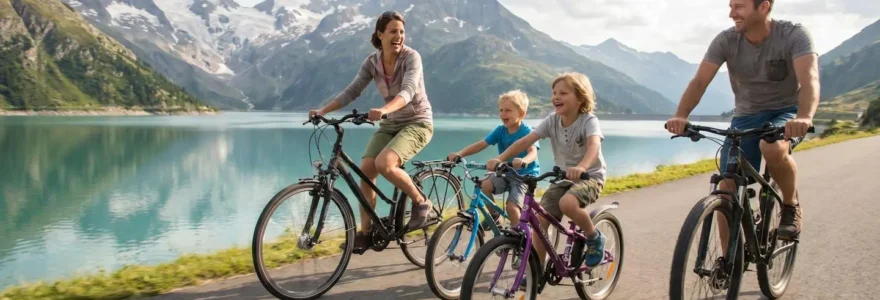
Picking the wrong bike at a rental station can quietly ruin a day out. Too rigid a frame on a flat lakeside path, or a leisure-oriented model hauled up a forest trail — the mismatch shows within the first half-hour. The five criteria below cut through the noise and translate into a straightforward decision, whether you’re heading out solo, as a couple, or with children in tow along the shores of Lake Annecy.
Three priorities before you pick up a bike :
- Match the bike category to your actual route (flat lakeside vs hilly terrain), not to your aspirations.
- Factor in the duration — a 1-hour loop and a full-day ride around the lake call for very different saddle comfort levels.
- If you’re travelling with children, the bike choice extends beyond your own model to the accessories required for them.
The range of bikes available for bike hire in Annecy spans everything from upright comfort models to electric-assist bikes and rugged off-road frames—an impressive diversity that becomes a real advantage only when the selection criteria are clearly defined from the outset.
Criterion 1 — Your planned route and terrain type
The terrain dictates the bike, not the other way around. The area around Lake Annecy offers two fundamentally different cycling environments that rarely mix well within a single outing.
The voie verte and the flat perimeter path hugging the lake are designed for smooth, rolling progress at a moderate pace. A comfort or city bike — upright position, wider saddle, puncture-resistant tyres — is the natural fit here. Its geometry reduces lower-back strain over longer flat distances, and the relaxed handlebar angle means you spend more time watching the scenery than managing the machine.
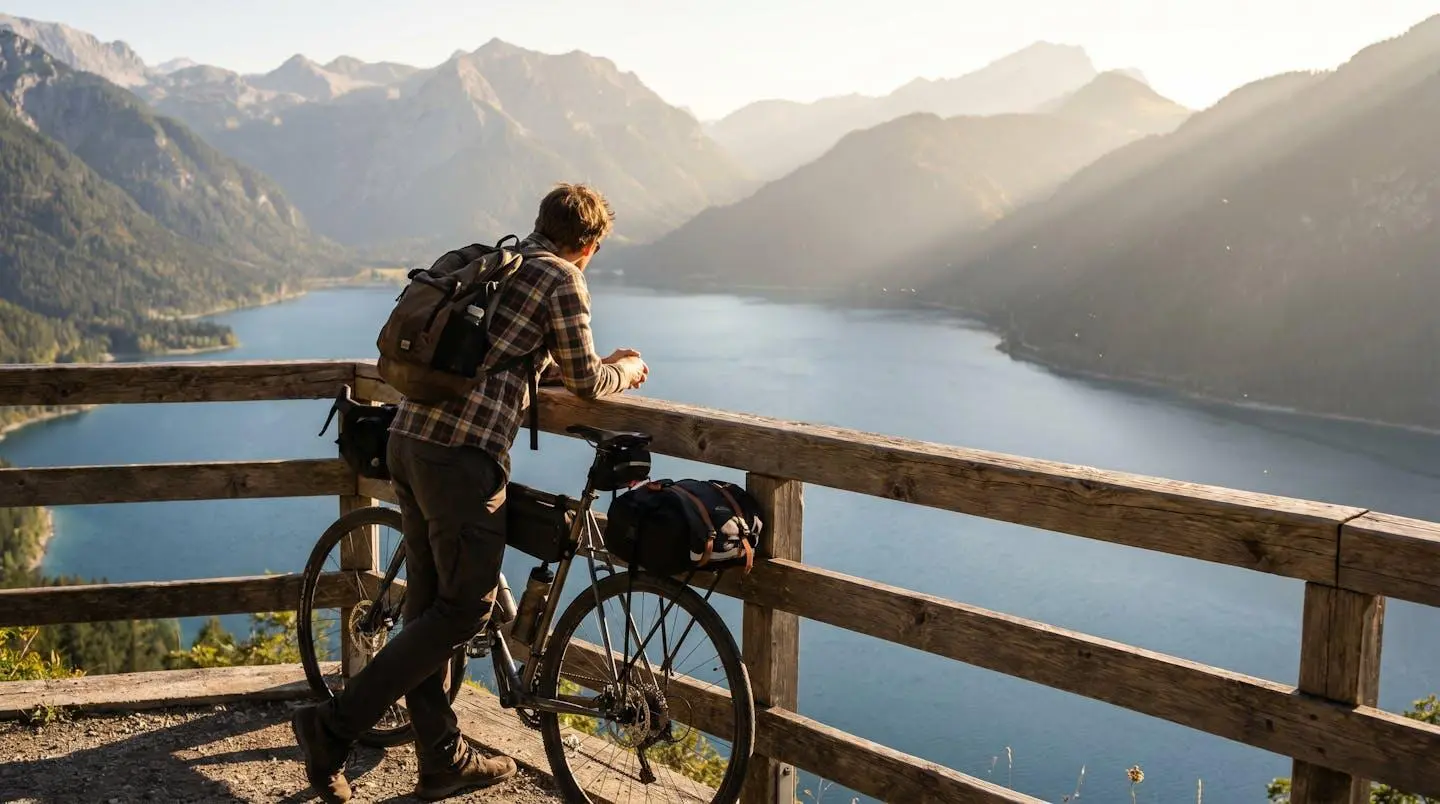
Venturing into the surrounding hills or forest trails shifts the requirements entirely. Loose gravel, root-crossed paths, and short but sharp inclines demand a bike with a wider tyre profile and, ideally, front suspension that absorbs shock rather than transmitting it directly to your wrists and shoulders. Choosing a flat-bar comfort model for this terrain is the most common mistake observed among first-time renters — the bike becomes an obstacle rather than a tool.
- If your route stays on the flat lakeside greenway (voie verte) :
A comfort or city bike is sufficient. Prioritise saddle width and an upright riding position over gearing range.
- If your route includes forest trails or hilly sections :
Select a cross/trekking bike or a mountain bike with front suspension. Tyre width and gear range matter here far more than aerodynamics.
- If your route mixes both environments (lake + a forest detour) :
A trekking bike or an electric model with mixed-terrain tyres offers the best compromise — robust enough for gravel, comfortable enough for extended flat riding.
- If you have not yet decided on a specific route :
Ask the rental team directly. Personalised itinerary advice based on your group’s profile is one of the practical advantages of choosing a local operator over a self-service kiosk.
One practical observation worth keeping in mind : rental bikes are calibrated for durability and versatility, not for peak performance. A rental mountain bike handles forest paths well, but expecting it to behave like a personal, precisely-tuned trail bike is unrealistic. The rental logic is about suitability, not optimisation.
Criterion 2 — Rental duration and physical endurance
Duration is the variable most systematically underestimated before a ride. The physical sensations of a 1-hour flat loop are simply incomparable to those of a half-day excursion or a full circuit of the lake.
Practical case : misjudging endurance on a half-day rental
Consider a common scenario : two adults who cycle occasionally book a comfort bike for a half-day ride. They set off from the town centre, ride the flat section without effort, then encounter a 2 km uphill stretch on the return leg. On a standard comfort bike with limited gear range, that climb turns a pleasant outing into an exhausting push. The same two riders on an electric-assist model would have covered the same distance without any meaningful fatigue spike — and arrived back in time to enjoy the afternoon.
The saddle design — often overlooked — becomes critically relevant once a ride passes the 90-minute mark. Narrow sport saddles that feel neutral on short distances create pressure points on extended flat routes. Wider, ergonomically shaped saddles are standard on comfort models and make a measurable difference on anything above a half-day hire.
Rental formulas at Annecy cover a spectrum from 1-hour slots to multi-day options, including morning, half-day, and weekend configurations. Matching your hire duration to a realistic assessment of your physical condition — not your optimistic projection from the breakfast table — is the single most useful adjustment most riders can make before collecting their bike.
Criterion 3 — Group composition and riders’ age range
A group is only as mobile as its most constrained member. When a ride includes children, older adults, or riders with significantly different fitness levels, the bike selection becomes a collective exercise rather than an individual one.
For families, the key question is not which adult bike to choose, but how to integrate children safely and comfortably into the group dynamic. Two main approaches exist : a rear child seat (for children who are old enough to sit independently but too young to ride autonomously) or a trailer hitched behind an adult bike (which accommodates one or two younger children and removes any balance requirement from them entirely). If you need to choose a child bike seat, the child’s age, weight, and neck muscle strength are the three parameters that determine which model is appropriate.
Mixed-level groups — where some riders are confident and others are genuinely novice — often benefit from electric assist on the weaker riders’ bikes. This equalises pace without forcing fitter riders to slow artificially, and prevents the demoralisation that comes from being consistently last on even mild inclines.
Good to know : Rental operators in Annecy typically offer children’s bikes adapted to different age ranges, along with trailers and child seats as add-on equipment. These accessories should be mentioned at the time of booking rather than requested on arrival, as availability varies — particularly during peak summer weekends.
One frequently overlooked configuration is the older adult rider who cycles infrequently. This profile generally performs well on a step-through frame (low crossbar entry) combined with wide handlebars and a gel saddle — all standard features on comfort models. The common error is to assign this rider a sport-oriented frame because it looks more capable, when comfort geometry reduces fatigue and improves control at lower speeds.
Criterion 4 — Electric assist — a tactical, not prestige, choice
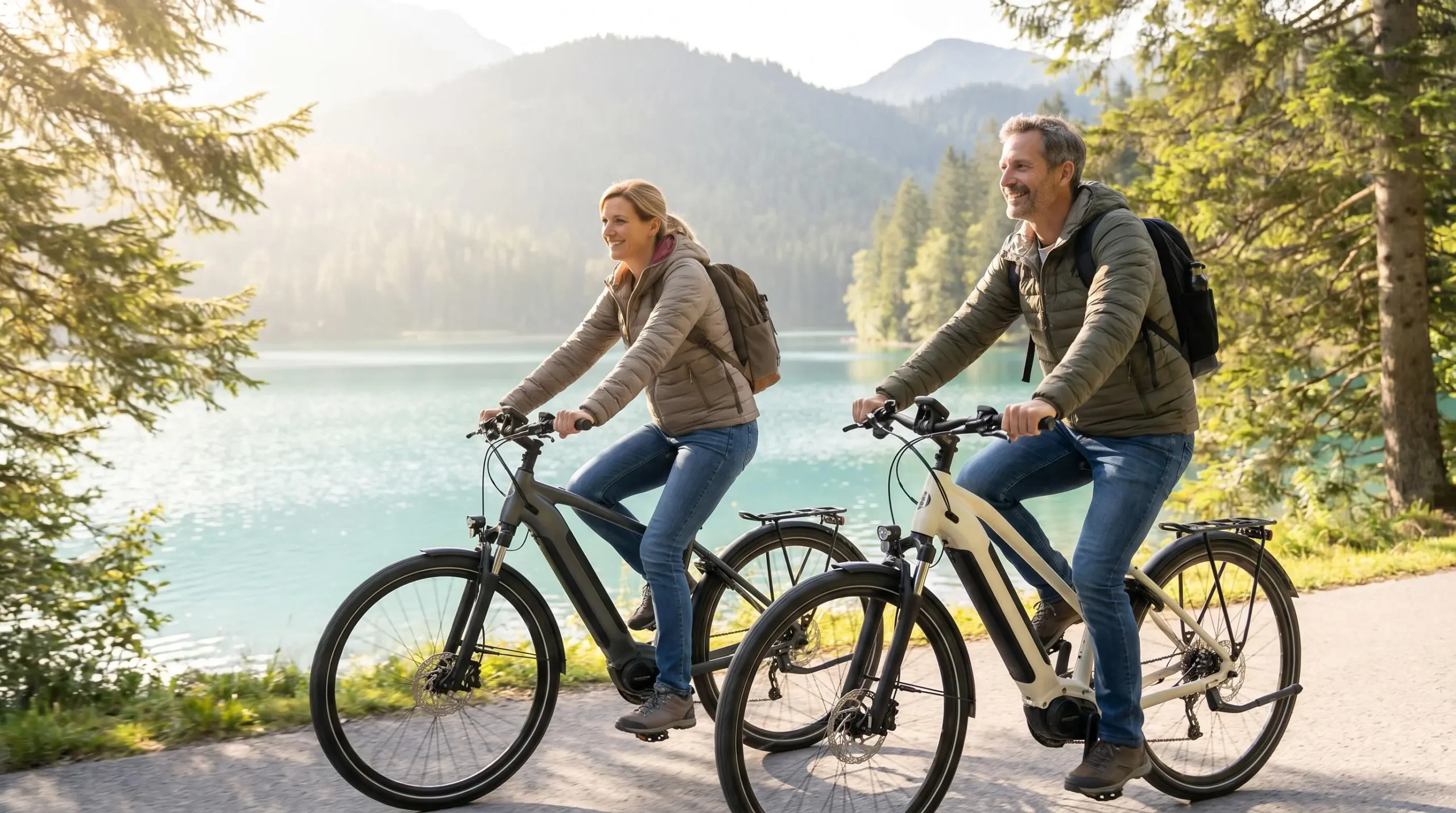
Electric bikes carry a reputation for being the « luxury » or « lazy » option. That framing misses the practical point. An electric-assist bike is a pacing tool, not a status symbol, and its relevance depends entirely on the gap between a rider’s fitness level and the physical demands of their chosen route.
The complete circuit of Lake Annecy covers roughly 40 km with occasional short climbs. For a rider who cycles regularly, a standard bike is perfectly adequate. For someone whose last significant ride was several months ago, the same route on a standard model can tip from enjoyable to gruelling around the two-thirds mark. The electric assist absorbs that gap — the rider still pedals, still makes choices about pace and effort, but the motor prevents the kind of fatigue that turns an afternoon activity into an ordeal.
Tactical tip : If you are uncertain whether you need electric assist, the question to ask is not « am I fit enough? » but rather « how do I want to feel at the end of the ride? » Arriving relaxed and ready for dinner is a legitimate outcome, not a compromise.
For groups, electric models are particularly valuable when one or two members have a noticeably lower baseline fitness or when the group includes someone recovering from a minor physical setback. A single electric bike in an otherwise standard group can synchronise collective pace more effectively than any other adjustment.
The practical consideration worth weighing is the rental cost differential. Electric-assist bikes are priced above standard models, and for a 1-hour flat ride along the voie verte, the upgrade rarely justifies itself. For anything above two hours, or for routes that include meaningful elevation, the equation shifts. If you are planning a half-day or full-day hire, the question of whether to choose a bike trailer and manage a heavier load makes electric assist even more relevant—towing any accessory adds noticeable resistance, and the motor helps compensate smoothly.
Criterion 5 — Equipment included and what to verify before departure
The bike itself is only part of the equation. The equipment bundled with the rental — or notably absent from it — determines whether an outing is genuinely self-contained or requires improvised solutions mid-route.
A well-equipped rental should cover at minimum : a helmet fitted to the rider’s head circumference (not simply handed over in a size range), a functional lock, and a front or rear basket if carrying items is part of the plan. These are not extras — they are the difference between a ride that flows and one interrupted by logistics.
- Saddle height adjusted to your leg extension — knees should have a slight bend at the bottom of each pedal stroke, not lock out fully.
- Both brakes tested at a standstill — front and rear should engage firmly before the lever reaches the handlebar.
- Tyre pressure checked visually — a soft tyre is disproportionately hard to pedal on flat tarmac and increases puncture risk on gravel.
- Child seat or trailer attachment tested before loading a child — check the seat’s stability and the trailer hitch under light lateral force.
- Confirm the itinerary recommendation with the rental team — local knowledge about current trail conditions (after rain, resurfacing works) can save a detour.
The verification above takes under five minutes and eliminates the three most common sources of mid-ride discomfort : saddle position, brake fade on descents, and the psychological friction of a seat or accessory that was never properly adjusted. Rental staff in Annecy are accustomed to assisting with these checks — it is standard practice, not an imposition.
Before you set off
The five criteria above work as a sequence, not a checklist of independent boxes. Route terrain sets the bike category. Duration and endurance level determine whether electric assist makes tactical sense. Group composition adds the layer of children’s equipment or fitness equalisation. And the departure checks convert a well-chosen bike into a ride that actually delivers on its promise.